
Last updated November 24, 2026
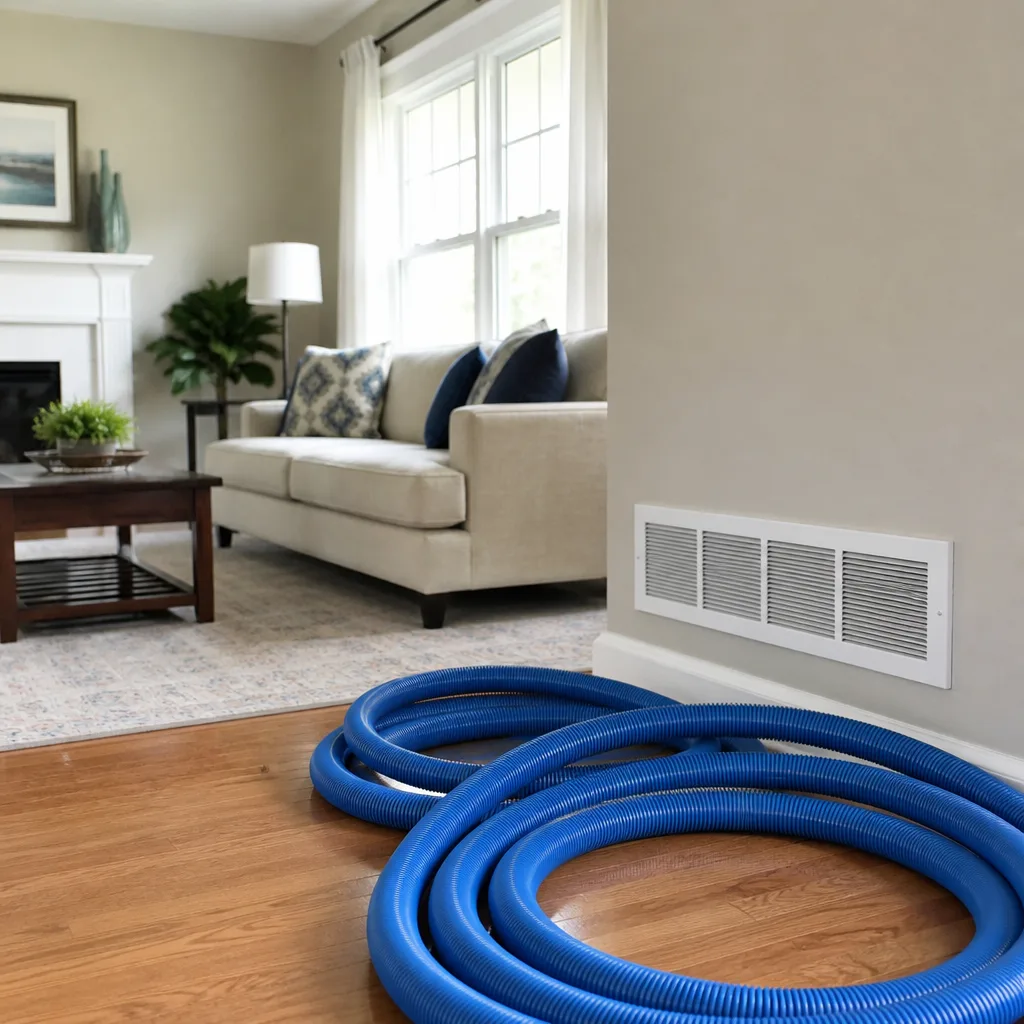 Whole-home duct cleaning
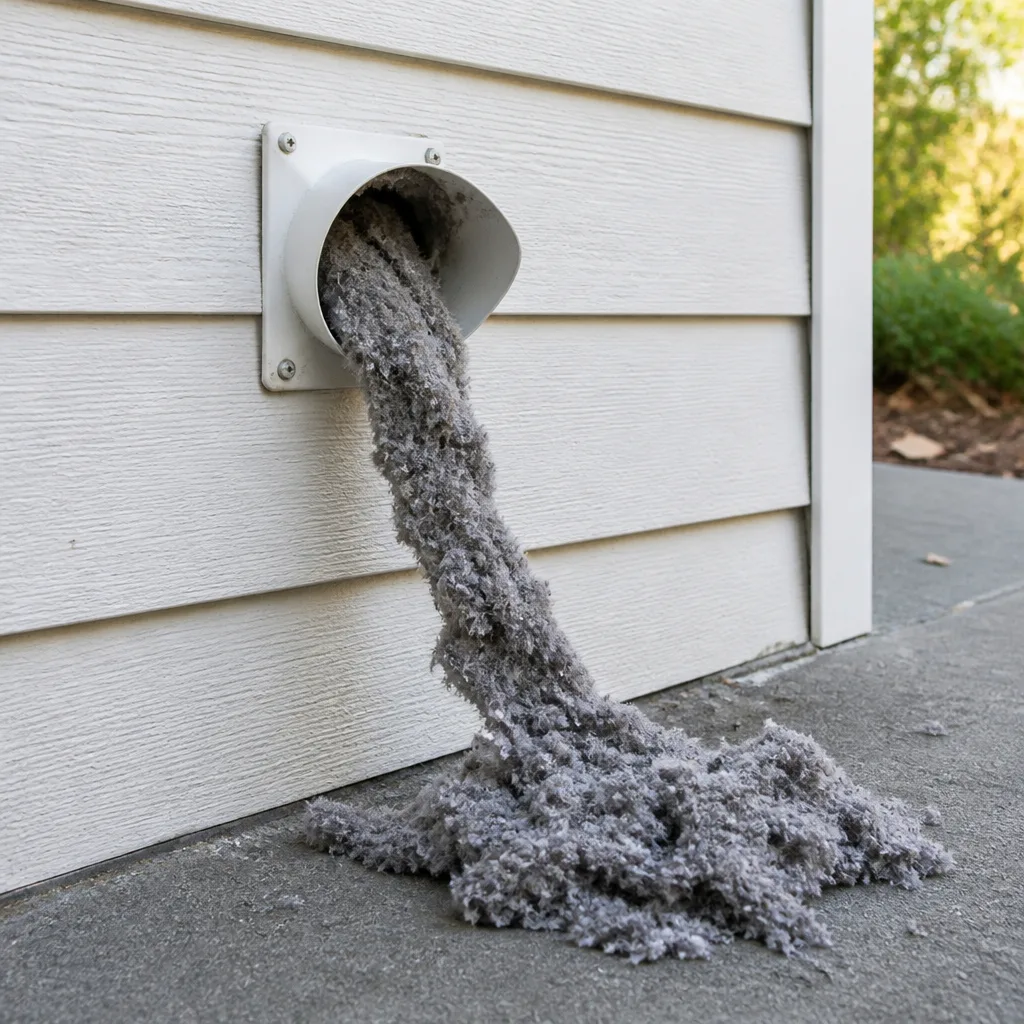 Dryer vent cleaning
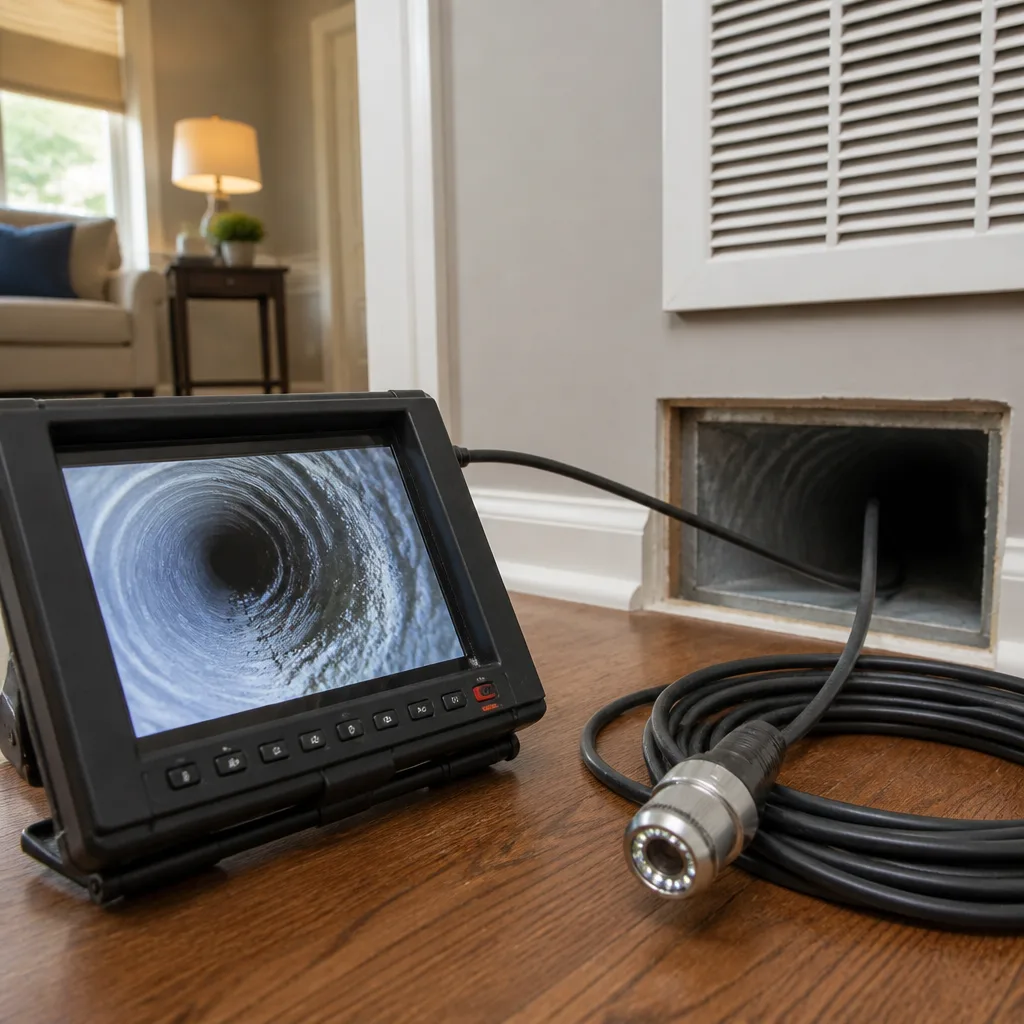 Camera inspection
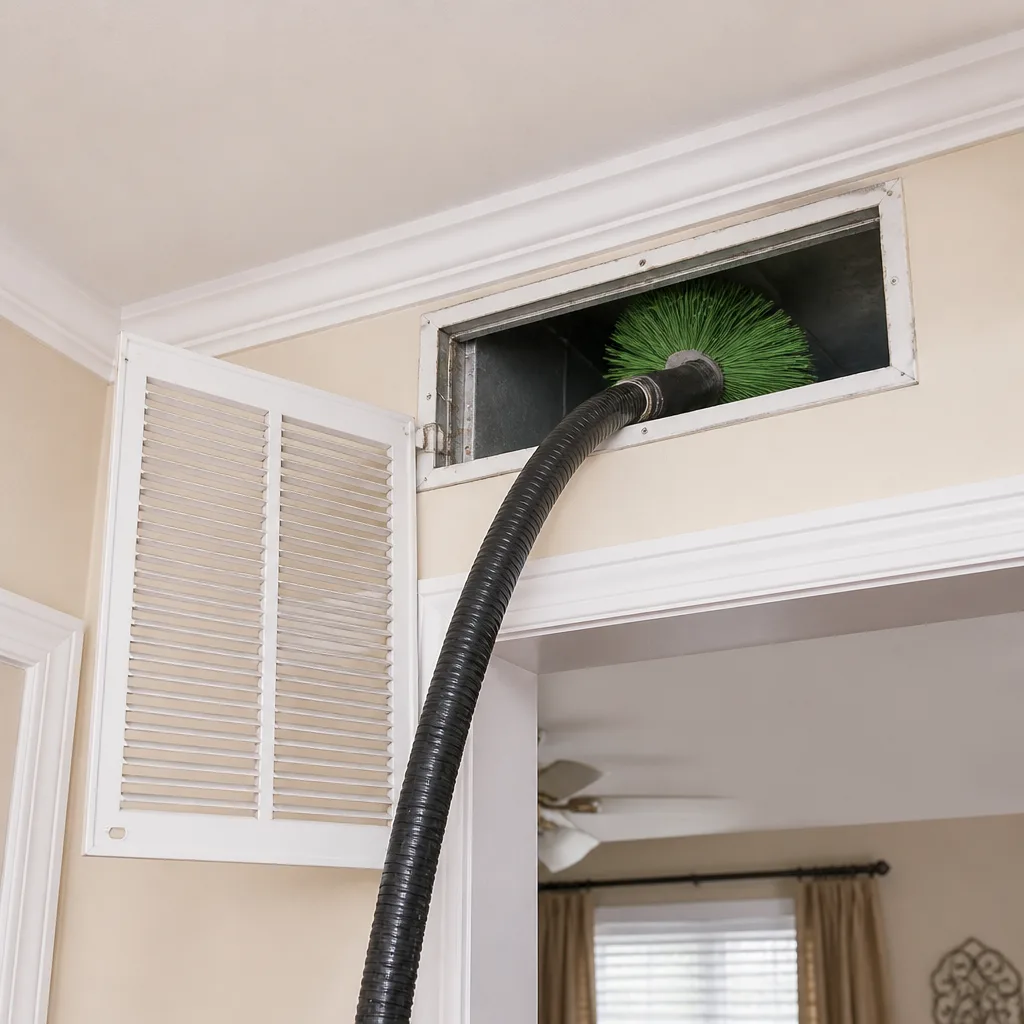 Sanitizing & deodorizing
Whole-system duct and dryer vent check with before-and-after photos - you see exactly what came out of your vents
That "$99 whole-house special" is a bait ad - the real number appears once they are in your hallway, or the "clean" is a shop-vac at the register. We photograph the inside of your ducts before and after instead.
Air Duct Cleaning Maintenance Checklist for Provo Homeowners
Most homeowners change the filter and figure their duct system is handled. But a filter only traps what’s already moving through the system. It does nothing about dust that settles in trunk lines, dust that collects on the blower wheel, or the hairline gap at a return grille that lets attic air slip past the filter entirely. The checklist in this guide catches what builds up before it reaches the filter, and it’s built around Provo’s specific seasons: inversion winters, wildfire smoke in the summer, and the two mode switches each year when your HVAC system changes how it runs. You’ll learn what to check yourself, what to leave to a technician, and the exact warning signs that mean a monitoring item just became a real repair.
Quick Answer
A duct maintenance checklist for a Provo home is a rotating set of checkpoints across the year, not a single annual cleaning. Homeowners should inspect registers, the air handler drain pan, visible flex duct, and return-air grille gaps every season (four times a year), change filters on a schedule that tightens during winter inversion season and the July-September wildfire smoke window, and book a full professional cleaning every three to five years or sooner if you see the red-line signs covered below. The goal is spotting deterioration early, before it turns into a full cleaning plus duct repair job.
Styles & brands we work with
- Whole-home duct cleaning
- Dryer vent cleaning
- Camera inspection
- Sanitizing & deodorizing
Table of Contents
- Why a Cadence Beats a One-Time Cleaning
- The Month-by-Month Provo Maintenance Calendar
- What You Can Inspect Yourself Each Season
- Choosing the Right Filter for Provo’s Air
- Homeowner Tasks vs. Tasks That Need Equipment
- Red-Line Thresholds: When to Stop Monitoring and Call
- Don’t Skip the Dryer Vent in Your Checklist
- Keeping Records That Actually Help You
Why a Cadence Beats a One-Time Cleaning
Duct deterioration happens by degrees. A flex duct run under a Provo house sags a little more each summer, a return grille gap widens a fraction as the wood frame dries, and a blower wheel accumulates a thin film that turns into a thick one over a couple of seasons. None of these announce themselves. None cause a sudden failure you’d notice and act on. They just quietly reduce how much air reaches each room and how clean that air is when it arrives.
A checklist works because it turns those invisible graduations into scheduled observation points. You catch the sag when it’s an inch, not when a duct has fully disconnected and your back bedroom gets almost no air. You notice the grille bypass before it’s been pulling attic dust into the system for a full winter inversion. That’s the whole logic of this document: a set of dates where you look, rather than waiting for a symptom that finally gets your attention.
We’ve seen the difference between a system that’s been on a cadence and one that hasn’t, and the gap in condition is wider than most people expect. A duct system cleaned and inspected on a schedule stays close to its original airflow. One that only gets attention when something breaks tends to arrive needing more than a cleaning. The cadence is the cheaper path, and it’s also the one that keeps your indoor air consistent year to year.
Provo adds a layer that most generic duct guides ignore: your air quality is seasonal in a way that flat schedules don’t account for. Winter inversions trap particulate in the valley, summer brings wildfire smoke, and the spring and fall mode switches change how your system moves air. A cadence built around those events does more than a generic “clean every few years” rule ever could. If you want the full service picture behind this checklist, our air duct cleaning page covers the process from intake to vent.
The Month-by-Month Provo Maintenance Calendar
Here’s the cadence we recommend, tied to Provo’s actual seasonal triggers rather than generic quarterly reminders. Print it or save it to your phone.
January – March: Inversion Season
- Change or check your filter every 30-45 days. Inversion season holds particulate in the valley, and your filter loads faster than it does in clean-air months.
- Vacuum every supply register monthly. Run the wand over the face and into the fins you can reach. Wipe them with a damp cloth if they’re greasy or dull.
- Check the air handler drain pan once a month. Look for standing water, rust, or a film of slime. Provo’s cold nights and warm days during this stretch can cause condensate issues even when cooling isn’t running hard.
- Smell-test rooms you don’t use often. A faint musty or stale smell in a guest room or basement is an early sign of moisture or microbial activity in the duct run serving it.
April – June: Cooling Switch-On
- Before the first cooling day, check that all supply registers are open and unobstructed by furniture or rugs.
- Inspect visible flexible duct in the attic or crawlspace if you can safely access it. Look for sags, kinks, or disconnected collars.
- Test return-air grille gaps by holding a piece of tissue near the frame. If it flutters along the edge, air is bypassing the filter.
- Schedule a professional cleaning or inspection if it’s been three or more years, or if you skipped a filter change during inversion season.
July – September: Wildfire Smoke Window
- Tighten your filter schedule again. Smoke season pushes fine particulate into the system, and a loaded filter stops doing its job.
- Close windows during smoke events and rely on your system’s filtration. If you have a whole-home filtration unit, this is when it earns its keep.
- Watch registers for soot or dark discoloration. A dark ring around a supply register during smoke season is a sign your filtration is underperforming.
- Consider a filter upgrade for this window only, then step back down in fall if your system can’t handle the higher restriction long-term (see the filter section below).
October – December: Heating Switch-On
- Check registers for the “first heat smell.” A brief dusty smell on the first heating day is normal. A smell that persists or returns is not.
- Inspect the drain pan again, and clean any standing water before the heating season starts.
- Schedule a dryer vent inspection if it’s been more than a year since the last one.
- Recheck return-air grille gaps and note any that have widened.
This calendar isn’t rigid. If you have pets, add a filter check roughly halfway between the dates above. If you’ve recently remodeled, treat the room nearest the work as a separate inspection zone for six months. The point is a routine, not a rulebook.
What You Can Inspect Yourself Each Season
Most of what matters in a duct system is visible if you know where to look and what to look for. Here are the specific checkpoints, what healthy looks like, and what a warning sign looks like.
- Register color and texture. A healthy supply register faces look uniformly light and clean. A material-change signal: dust buildup on one register that isn’t showing up on the others. That asymmetry often means air is going somewhere unexpected in the run behind it. Wipe the face and check again two weeks later.
- Air handler drain pan condition. The drain pan sits underneath the indoor coil. It should be dry when cooling isn’t running, and it should never hold standing water. Look for rust spots, slime, or a trickle that isn’t reaching the drain line. Any of those is a reason to call for an inspection, not to keep monitoring.
- Visible flexible duct sags and disconnects. If you can safely look in the attic or crawlspace, note any flexible duct that looks like it’s resting heavily on the structure, kinking at a turn, or clearly pulled away from its collar at the air handler or register boot. A sag that reduces flow doesn’t fix itself. A disconnect leaks unconditioned air into the structure and pulls attic air into the system.
- Return air grille bypass gaps. This is the one homeowners miss most. The return air grille’s job is to pull room air through a filter before it enters the system. If there’s a gap around the edge of the grille where the frame meets the wall or floor, air is bypassing the filter entirely. Hold your hand near the frame while the system runs. A noticeable pull at the edge means the gap is real.
- The smell test. Walk through rooms you don’t use often and pause. A healthy duct system smells like nothing. A quiet musty note, or a smell that’s stronger in one room than others, points to the run serving that room.
None of these checks require tools. They take about twenty minutes total and tell you whether the checklist item stays in the “monitor” column or graduates to “call.”
Choosing the Right Filter for Provo’s Air
Filter selection is where well-meaning homeowners often do more harm than good. The instinct is to buy the highest MERV rating available, thinking it filters the most. But MERV is a min-max problem: too low and fine particulate passes through, too high and the filter’s restriction starves your system of airflow.
In Provo, the recommended baseline is a MERV-8 for most of the year. That catches pollen, dust, and the larger particles that build up in ducts without putting excessive load on the blower. During winter inversion season and the July-September smoke window, a MERV-8 can be undersized for the fine particulate those events send through the valley, and stepping up to a MERV-11 or MERV-13 makes a real difference.
But here’s the caution. A MERV-13 filter on a system designed for MERV-8 can reduce airflow enough to cause problems: the blower works harder, static pressure rises, and in older systems the result is uneven heating and cooling, a heavier load on the motor, and coil freezing in the worst cases. If your home has an older HVAC system, do one of two things before upgrading to MERV-13: check whether the system’s spec sheet calls for it, or have a technician measure static pressure to confirm the system can handle the restriction. Whole-home filtration systems from brands like Honeywell and Aprilaire are often the better answer for Provo homeowners dealing with smoke season, because they combine higher filtration with a design that accounts for the pressure drop. We clean, service, and advise on those systems regularly.
A simple filter rule for Provo
- Baseline months (roughly April-June, part of October): MERV-8, change every 60-90 days.
- Inversion months (January-March): MERV-8 to MERV-11, check every 30-45 days.
- Smoke months (July-September): MERV-11 to MERV-13 if your system supports it, check every 30 days.
- Pets or active remodeling: check monthly regardless of season.
The filter is your cheapest line of defense, and the price of getting it right is a few dollars per change.
Homeowner Tasks vs. Tasks That Need Equipment
Here’s where we get direct: some checklist items belong in your hands, and some don’t. Knowing the difference saves money and keeps you safe.
Tasks homeowners can handle
- Changing or checking the filter on the schedule above.
- Vacuuming and wiping supply and return registers.
- Visually inspecting the drain pan.
- Checking for bypass gaps at return grilles.
- Looking for flex duct sags and disconnects in accessible spaces (look only, don’t try to re-seal).
- Keeping a simple log of filter changes and observed changes.
Tasks that need professional equipment
- Measuring static pressure. This requires a manometer or a digital pressure gauge plumbed into the return and supply plenum. Without the reading, you can’t actually know whether a filter is starving the system or how much restriction the ductwork is adding. Homeowners who try to infer this from “how the system feels” usually get it wrong.
- Inspecting inside trunk lines and plenums. Surface visibility through a register is limited. Real condition assessment requires a camera and access panels.
- Cleaning the blower wheel, coil, and interior duct surfaces. Consumer shop vacuums don’t have the airflow or the containment to move and capture the debris loosened during cleaning, and without containment, the debris ends up distributed through the house instead of removed. This is why professional systems exist: Rotobrush contact-cleaning tools agitate duct surfaces while Nikro HEPA extraction captures what’s loosened, and Abatement Technologies negative-air filtration keeps the work area contained on larger jobs.
- Sealing leaks in flexible or rigid duct. Finding a leak is one thing; sealing it correctly so it stays sealed through temperature swings is another.
- Sanitizing liner and plenum surfaces. Treated products (Guardsman-grade treatments, for instance) are meant for post-cleaning protection of interior surfaces and should only be applied after a proper clean, by a technician who knows the product.
Our technicians have up to 10 years of experience with these tools, and the difference between a shop-vac job and a properly equipped one shows up in what’s actually removed from the system. If you want to see the process, our HVAC cleaning page walks through what a full cleaning covers.
Red-Line Thresholds: When to Stop Monitoring and Call
A checklist is only useful if you know where “monitor” ends and “call” begins. These are the specific observations that mean a checklist item has escalated. If you see any of the following, don’t wait for the next calendar date.
- Standing water in the drain pan, or a slime film. This is a moisture problem, and moisture in a duct system is the setup for microbial growth. Call.
- A flex duct that has clearly disconnected from its collar. Even a small gap leaks a serious amount of air and can pull attic or crawlspace air into the system. Call.
- Visible mold or dark staining inside a register boot or on a grille face. Surface dust is one thing; dark staining that doesn’t wipe off is another. Call.
- A persistent musty smell in one or more rooms that grows stronger when the system runs. Call.
- A filter that loads in under two weeks. That rapid load usually means the system is pulling in unfiltered air somewhere. Call.
- Uneven airflow – one room noticeably weaker than others – that hasn’t changed with a fresh filter. This may be a duct leak, a sag, or a damper issue. Call.
- Return-air grille gaps that are clearly pulling air at the frame. We can seal those, and it’s a small job that pays back over years. Call.
Notice the pattern: everything above is an observable condition, not a guess. If you can see it, you can describe it on the phone, and a technician can tell you whether it’s a same-visit fix or a full cleaning.
Don’t Skip the Dryer Vent in Your Checklist
Dryer vent cleaning belongs on the same maintenance cadence as your air ducts, and the reason is fire safety, not comfort. A dryer vent that’s clogged with lint reduces airflow through the dryer, which means the dryer runs hotter and longer, which increases the risk of a lint fire. It also strains the dryer itself; a clogged vent shortens the life of the appliance.
Provo homes often have dryer vent runs that go through an exterior wall with a couple of elbows, and elbows are where lint accumulates fastest. A run with too many bends is worth inspecting yearly.
Clean the lint trap every load; that’s the easy habit. Book professional dryer vent cleaning roughly once a year, and treat these as red-line signs that move it up:
- Clothes take two or more cycles to dry.
- The dryer exterior feels unusually hot to the touch during a cycle.
- You notice lint accumulating around the exterior vent hood or the duct behind the dryer.
- A burning smell during a cycle (stop using the dryer and call).
You can check the exterior vent hood by hand while the dryer runs: if the damper flap barely moves or lint is visible around the opening, the run is restricted.
Keeping Records That Actually Help You
Detailed records are the difference between a duct maintenance habit and a documented history. When you sell a Provo home, or when a technician arrives and needs to understand the system, records matter.
Here’s what to track:
- Filter changes: date and MERV rating. A simple note in a phone app works.
- Any professional service: what was cleaned or repaired, and the date. If a company provides before-and-after photos (we do on every job), keep them with the record.
- Observed changes: “Noticed a sag in the flex duct to the master bedroom in May” and “Called in June, sealed” is a useful two-line history.
- Any major HVAC event: a compressor replacement, a blower motor swap, or a ductwork modification. Those events sometimes create new opportunities for leaks or debris.
You don’t need a binder. A note on your phone with a dated list is enough. What matters is that you can answer the question “when was the last time this system was professionally cleaned?” with a date and specifics. From the air handler to the vent cover, we service the whole pathway, and a documented history tells a technician where to look first.
Common Mistakes to Avoid
- Assuming the filter is the whole job. The filter traps airborne particulate but does nothing about settled debris in the trunk lines or the blower wheel. A clean filter and a clean duct system are two separate maintenance items.
- Buying the highest MERV filter available. On Provo’s older systems, a MERV-13 filter installed without checking airflow can starve the system, raise static pressure, and reduce comfort. Match the filter to the system, not to the marketing.
- Cleaning ducts once and never again. Consumers often treat duct cleaning as a one-time fix. A system on a three-to-five-year cadence with seasonal inspections stays in far better shape, especially through Provo’s inversion season and smoke window.
- Ignoring the return-air grille seal. If the grille isn’t sealed to the frame, air bypasses the filter. That’s the single most common cause of dust on supply registers in Provo homes, and it’s a quick fix.
- Using a shop vacuum to “clean” a duct. A shop vac moves the debris around but doesn’t capture it. Professional systems use HEPA extraction, and that’s the difference between cleaning and dispersing.
- Skipping the dryer vent. The dryer vent is a fire-safety checklist item, not an optional one. Annual inspections are the baseline.
- Not tracking what was done. Without dates and details, no one – including you – can tell when a system was last serviced. Tape a note inside the air handler cabinet if you don’t want an app.
See the difference
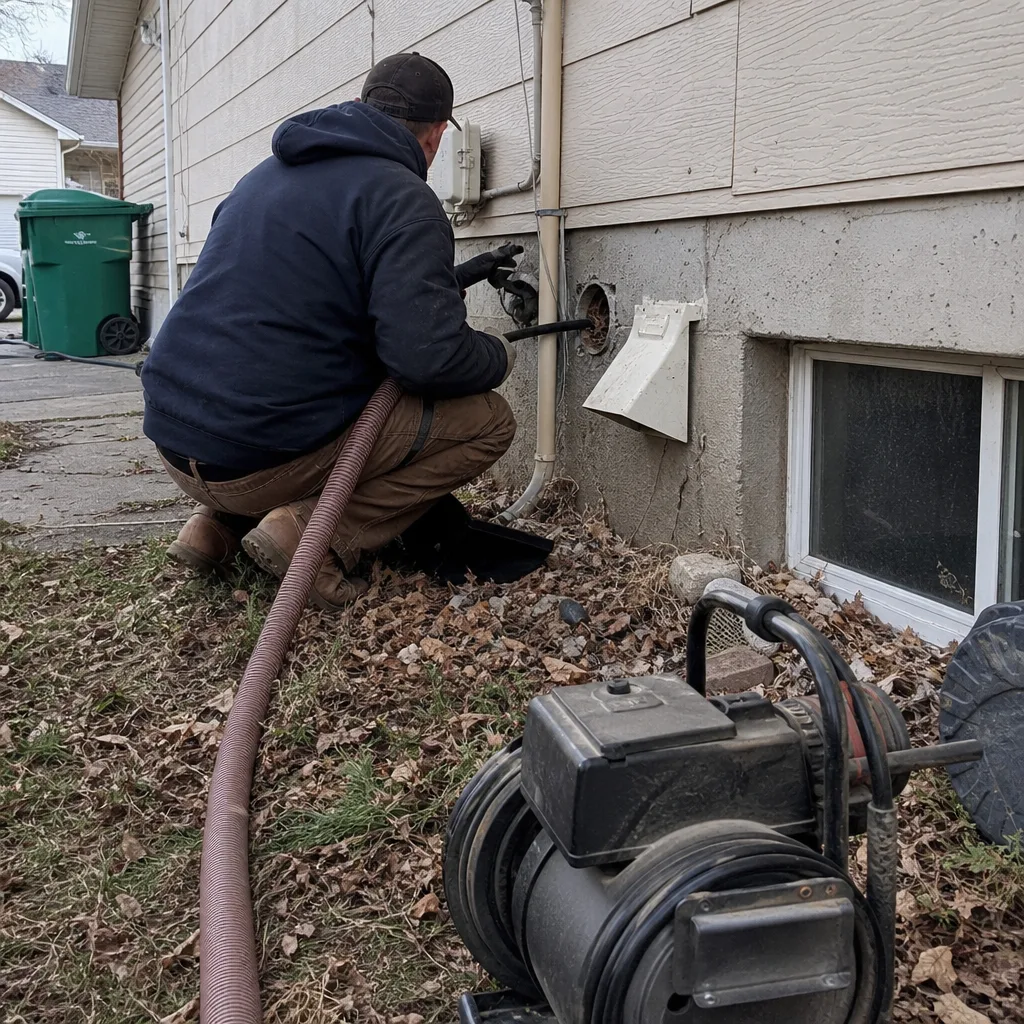 Before
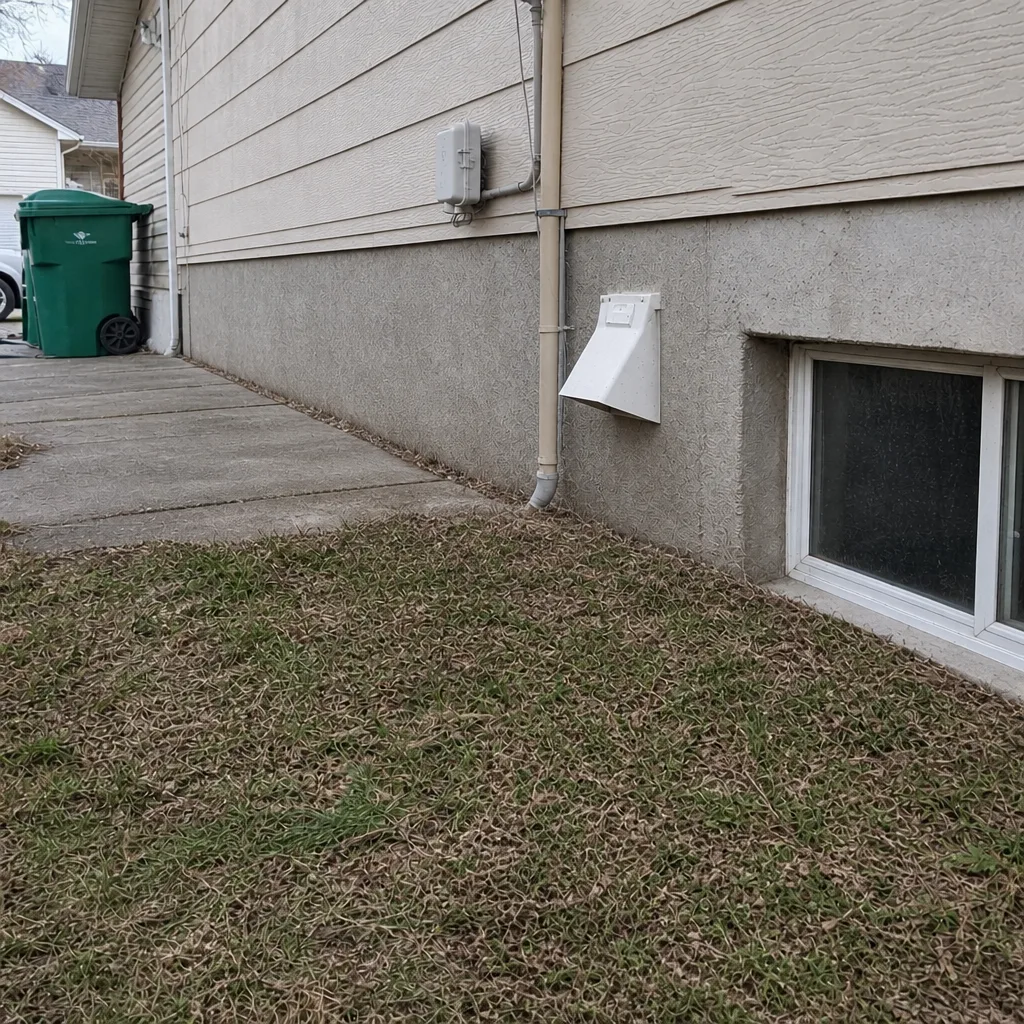 After
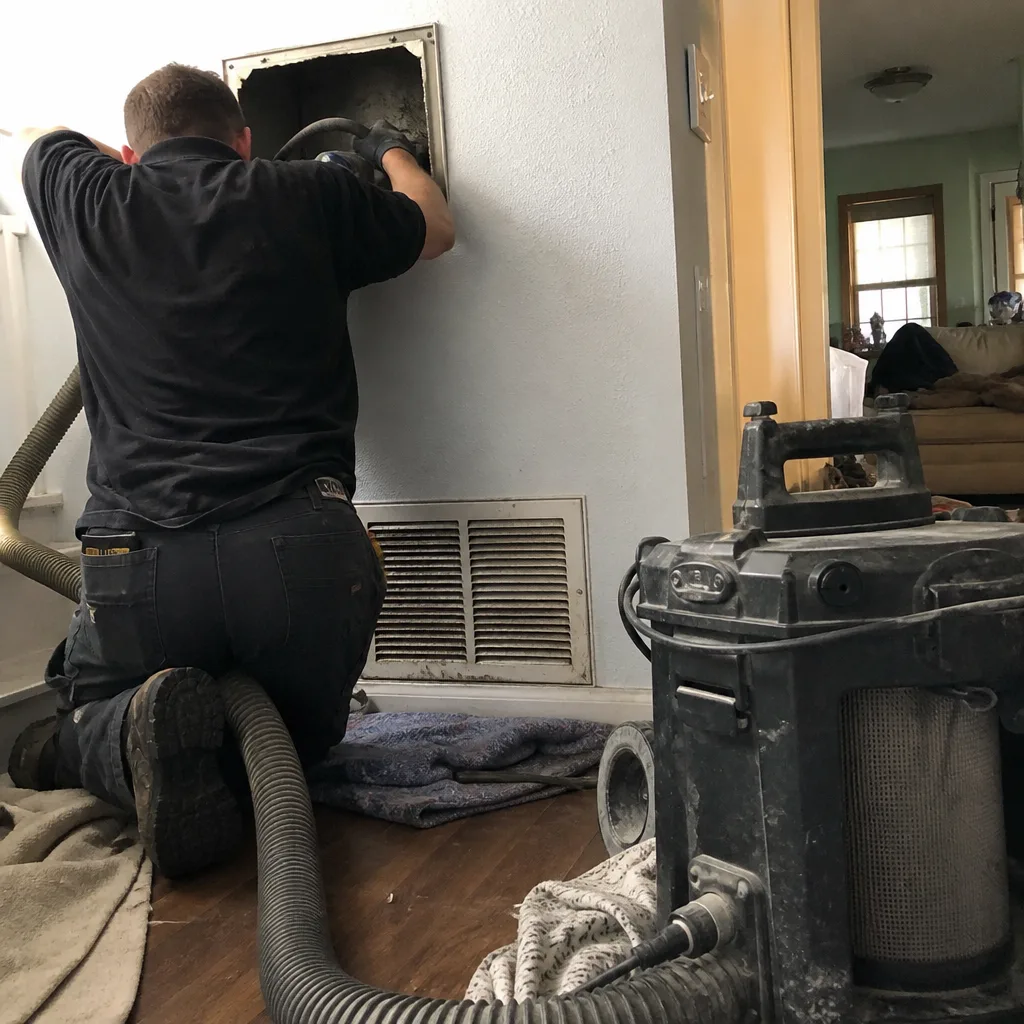 Before
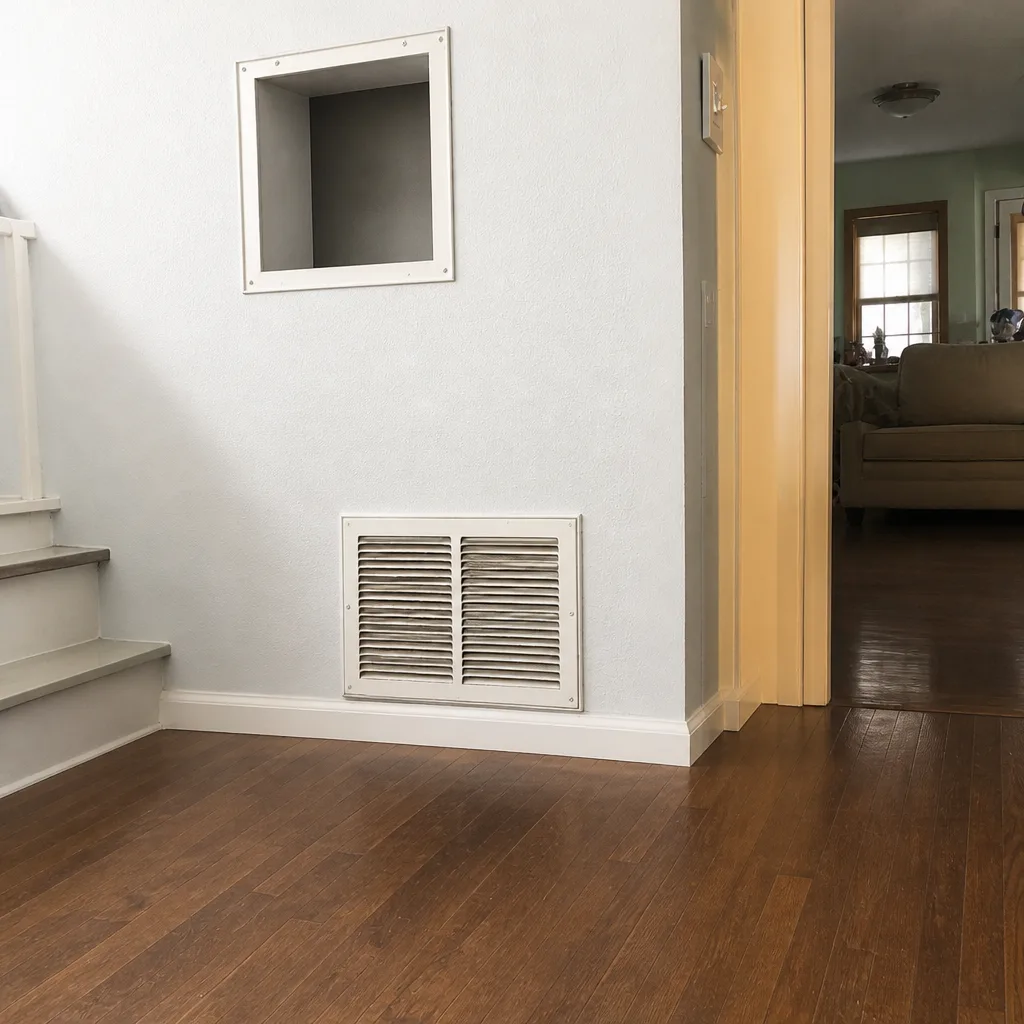 After
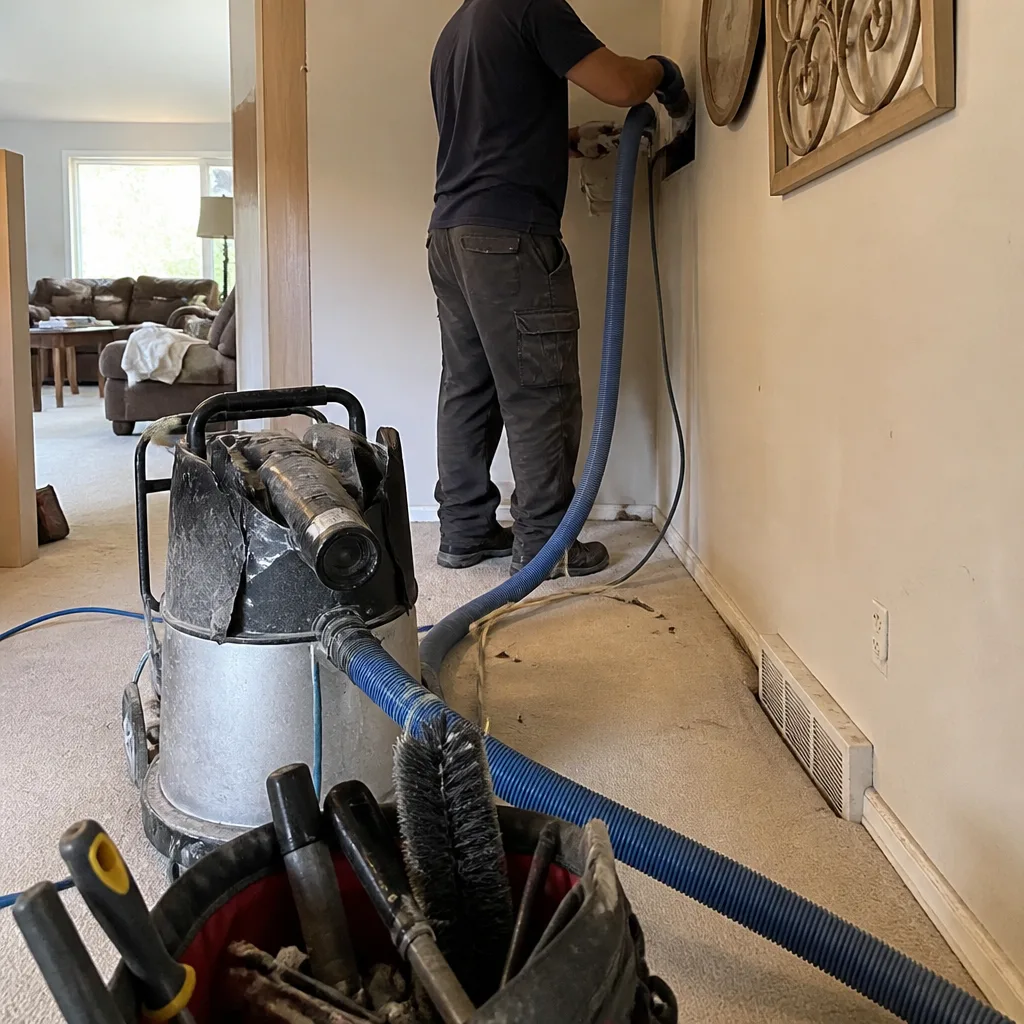 Before
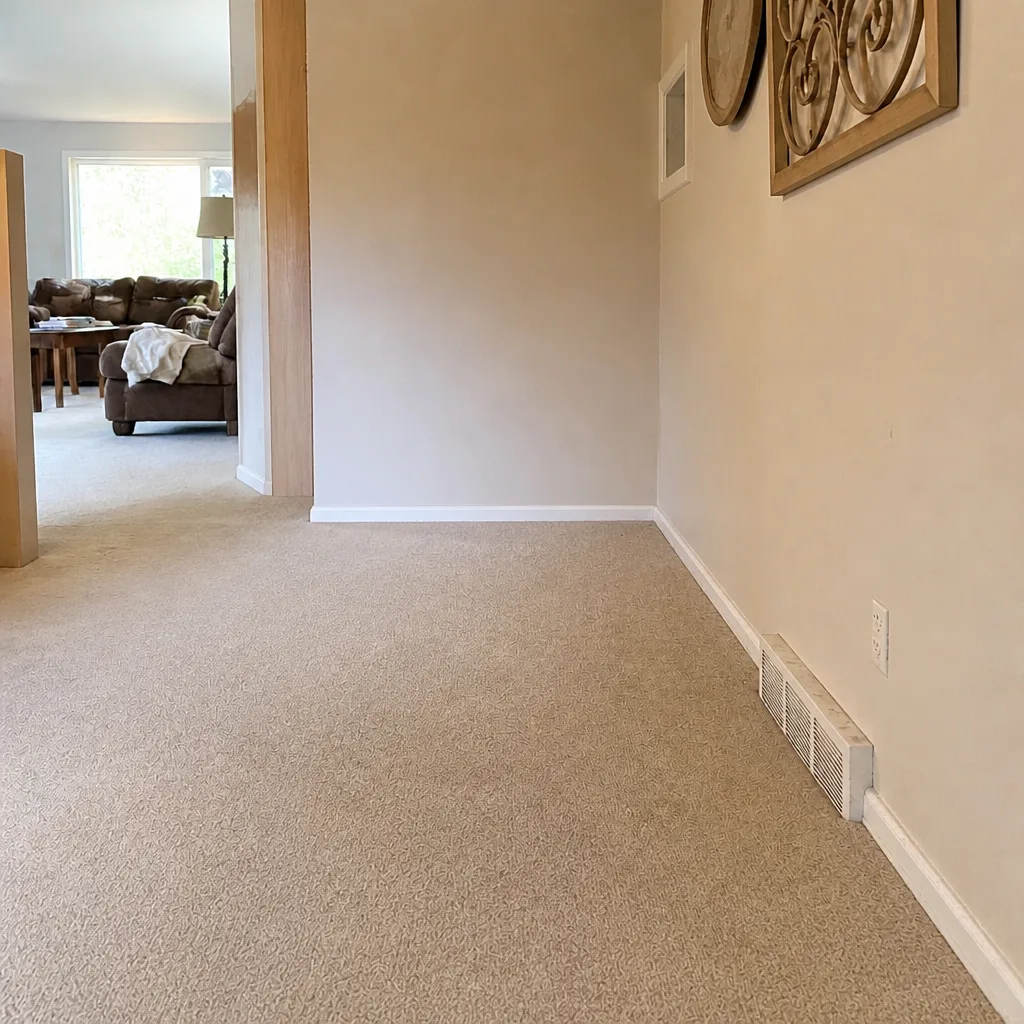 After
When to Call a Professional
Call a professional when any of these apply: you’re seeing a red-line sign from the section above, your system hasn’t been professionally cleaned in three to five years, you’ve recently completed a major remodel (remodel dust reaches places a filter never will), you’ve noticed a persistent smell in one or more rooms, or you’re selling or buying a Provo home and want documentation of the system’s condition. Also call if your static pressure has never been measured – it’s a baseline that informs every other maintenance decision you’ll make.
Provo Air Duct Cleaning Pros offers free estimates in Provo. We answer 24/7, and our fast dispatch runs 7am to 7pm, Sunday through Friday. Call (866) 937-8191 to book a visit and see the equipment we bring before any work starts. Our technicians have up to 10 years of experience, and we use professional-grade Rotobrush and Nikro cleaning systems with Abatement Technologies containment, so what comes out of your ducts is captured, not recirculated. If you want a second opinion on a quote you’ve already received, we’re glad to give one.
Frequently Asked Questions
Most Provo homes should have ducts professionally cleaned every three to five years, with seasonal homeowner inspections in between. Homes with pets, allergy sufferers, recent remodels, or heavy inversion-season filter load may need it more often. If you can’t remember the last cleaning, it’s been long enough. Call (866) 937-8191 for an exact quote – estimates are free.
No. Filters catch airborne particulate; they do nothing about debris that settles in trunk lines, the blower wheel, or the coil. A well-maintained filter regime is one part of the checklist, not a replacement for professional cleaning. Call us for a baseline inspection if you’re not sure of your system’s condition.
A MERV-8 is the baseline; during inversion season, MERV-11 is a good step up for most systems. MERV-13 only if your system can handle the restriction – older systems often can’t without airflow problems. If you’re unsure, we can check the system’s static pressure and recommend a filter that matches it. Call (866) 937-8191 to schedule.
Common signs include uneven room temperatures, dust streaks on registers, higher energy bills without a known cause, and visible gaps at flex duct collars or return grille frames. A technician can confirm with a pressure test and seal the leaks on the same visit. Call for a free estimate.
Yes. A clogged dryer vent is a real fire risk and also strains the appliance. Annual professional cleaning is the baseline for most Provo homes, and sooner if clothes take multiple cycles or the exterior feels unusually hot. Book it alongside your duct cleaning to cover the whole system in one visit.
It means contact-cleaning tools that loosen debris from duct surfaces, HEPA extraction that captures the loose debris, and containment equipment that keeps the work area clean during the job. Rotobrush, Nikro, and Abatement Technologies are the systems we use. Household vacuums don’t do any of those three jobs. Call (866) 937-8191 if you want to see the setup before booking.
The Bottom Line
A duct maintenance checklist is a cadence, not a one-time event. The five things worth remembering: inspect registers, drain pan, flex duct, and return grille gaps every season; adjust your filter schedule around Provo’s inversion and smoke windows; match filter MERV to your system’s airflow, not to the highest number on the shelf; leave static pressure measurement, trunk-line cleaning, and leak sealing to a technician with the right equipment; and treat the red-line signs above as calls, not monitor items. Documentation keeps the whole thing honest, and the dryer vent belongs on the same calendar. If any item on your checklist has escalated, we’re a phone call away.
Provo Air Duct Cleaning Pros covers the full pathway from the air handler to the vent cover: air duct cleaning, dryer vent cleaning, HVAC cleaning, duct repair and sealing, and air quality sanitizing. We work with Honeywell and Aprilaire systems and use Guardsman-grade treatments where appropriate after cleaning. Our technicians have up to 10 years of experience. We answer 24/7. Fast dispatch from 7am to 7pm, Sunday through Friday. Call (866) 937-8191 for a free estimate, and we’ll show you what a proper checklist visit looks like from start to finish.
Written by the team at Provo Air Duct Cleaning Pros.