
Last updated November 24, 2026
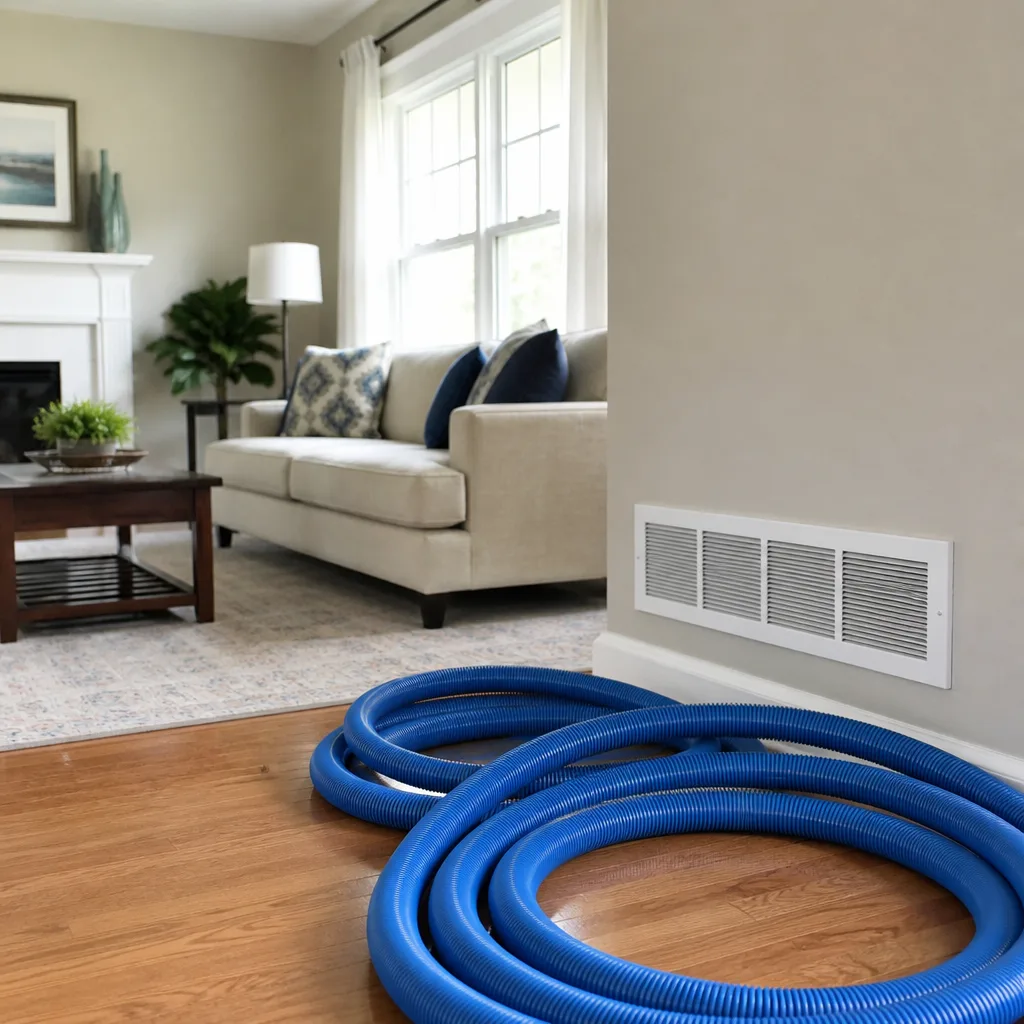 Whole-home duct cleaning
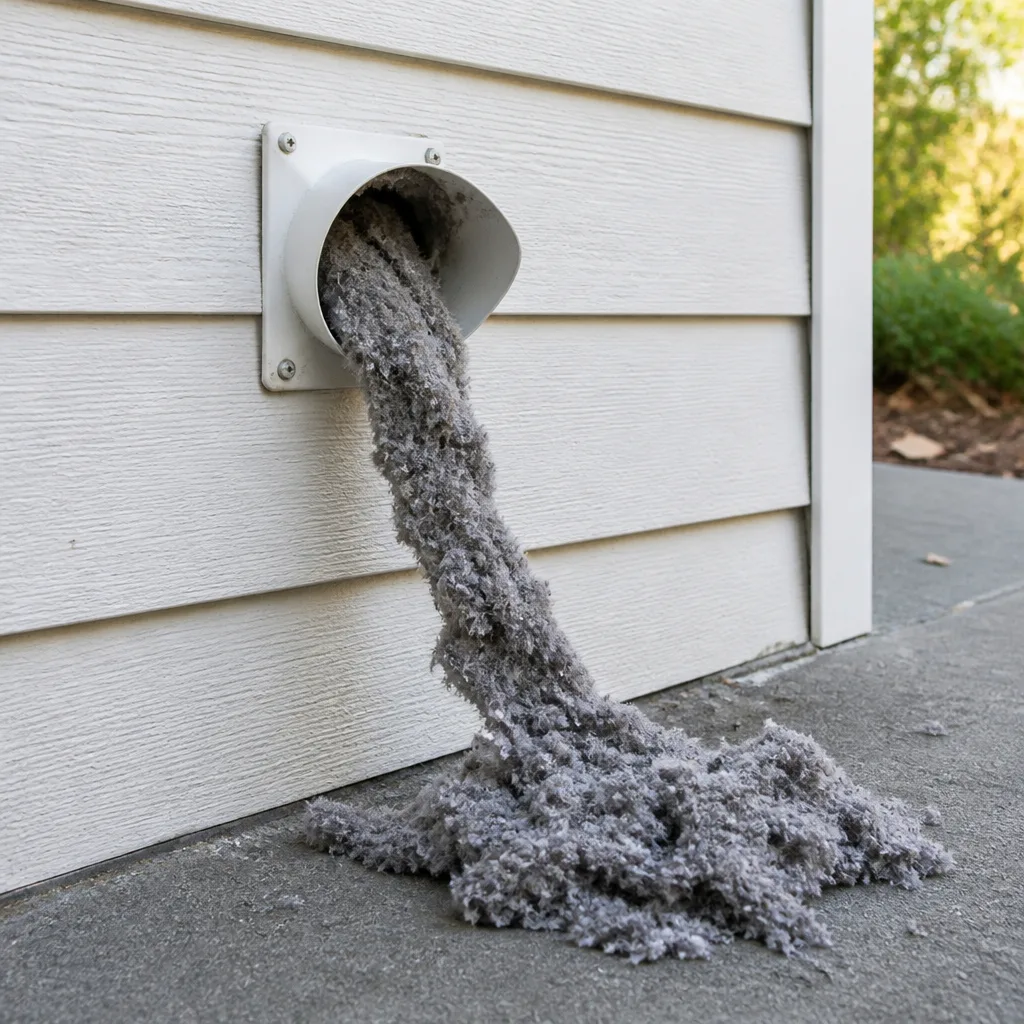 Dryer vent cleaning
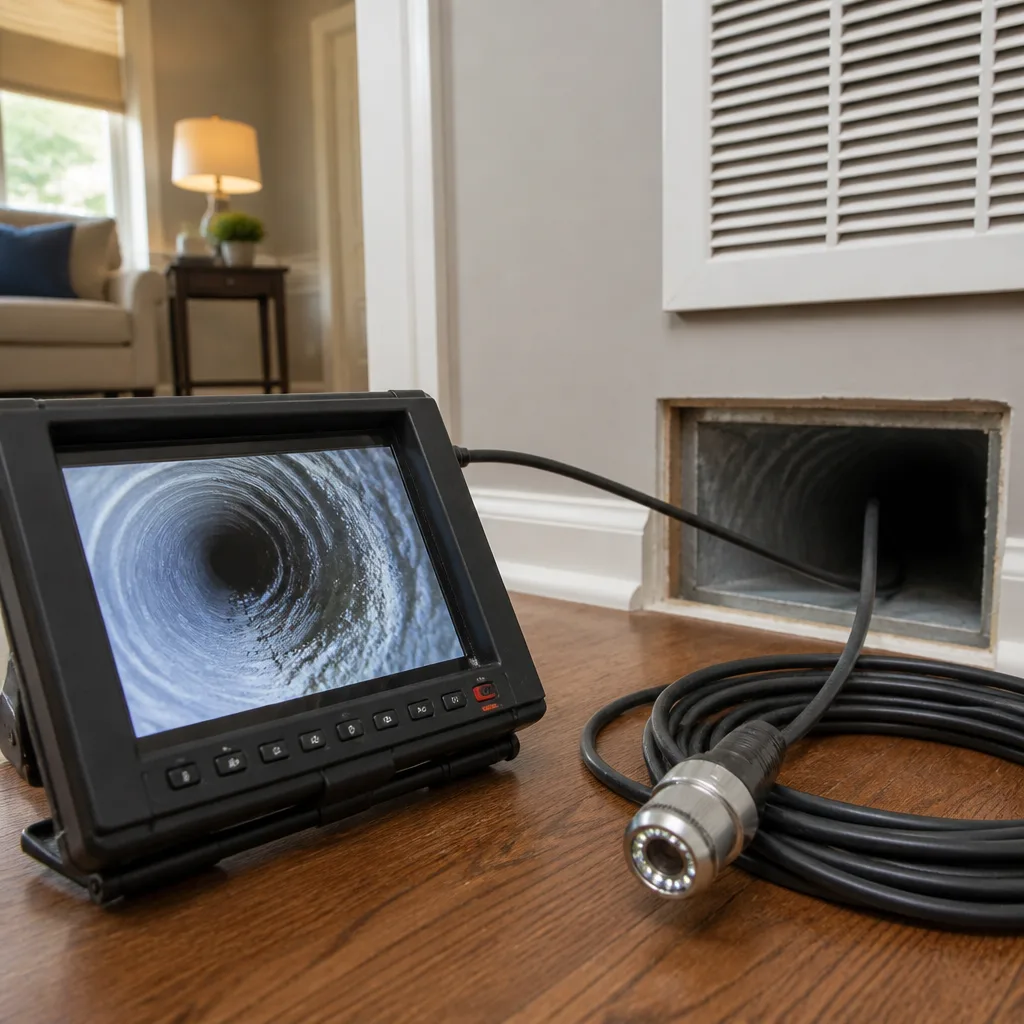 Camera inspection
 Sanitizing & deodorizing
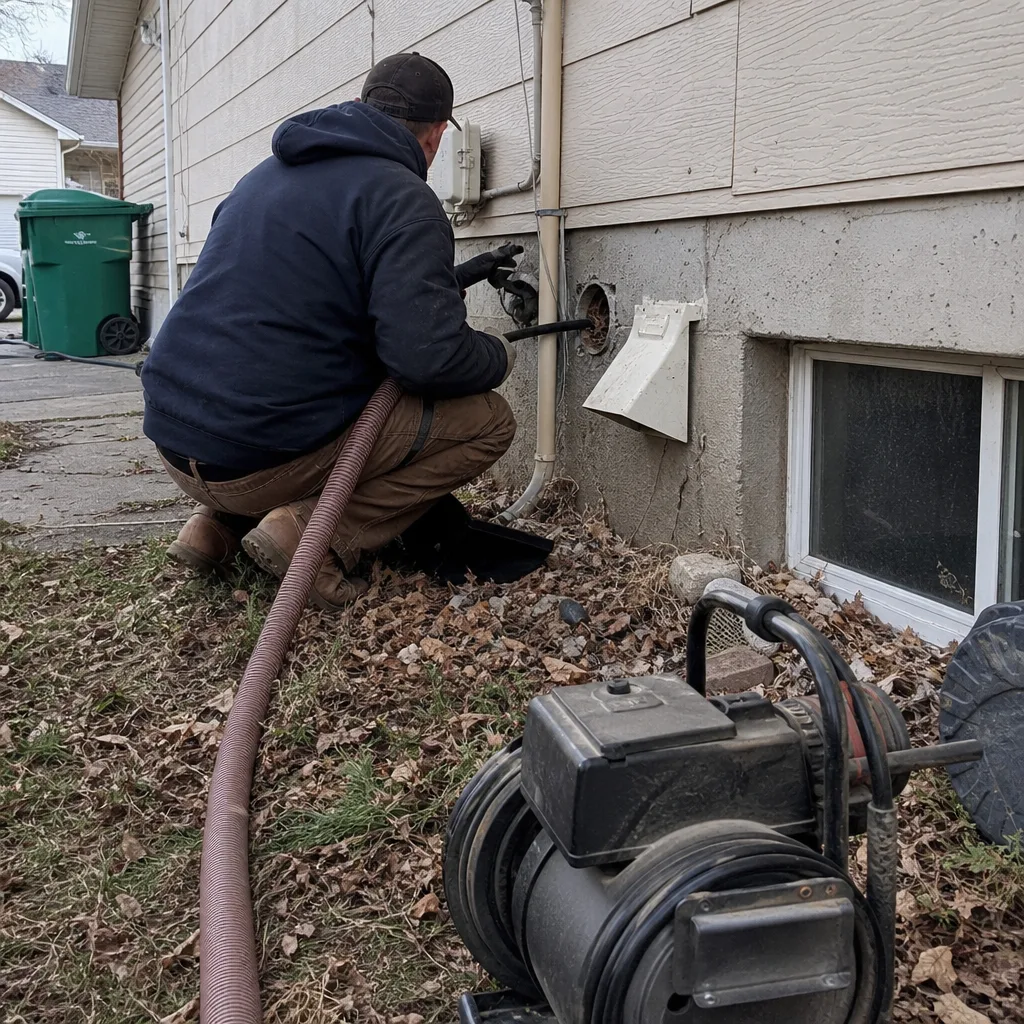
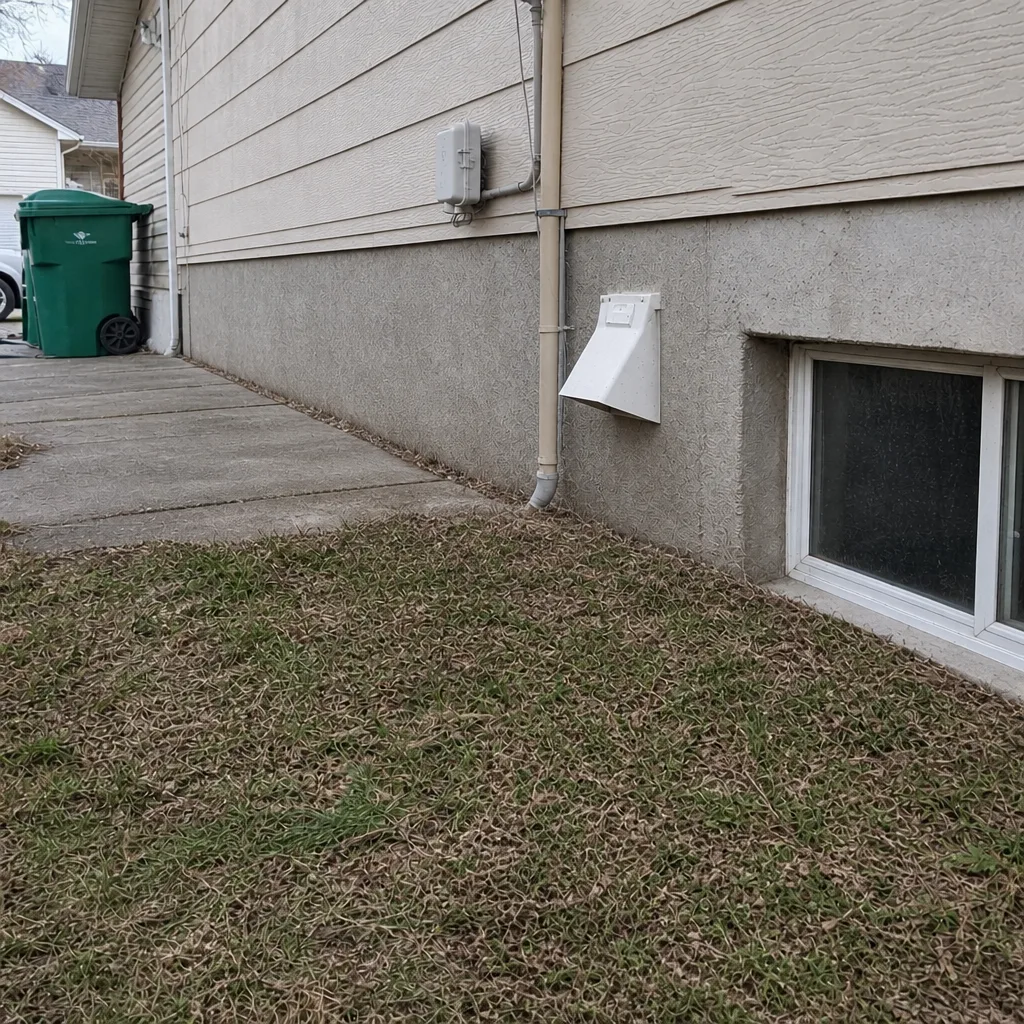
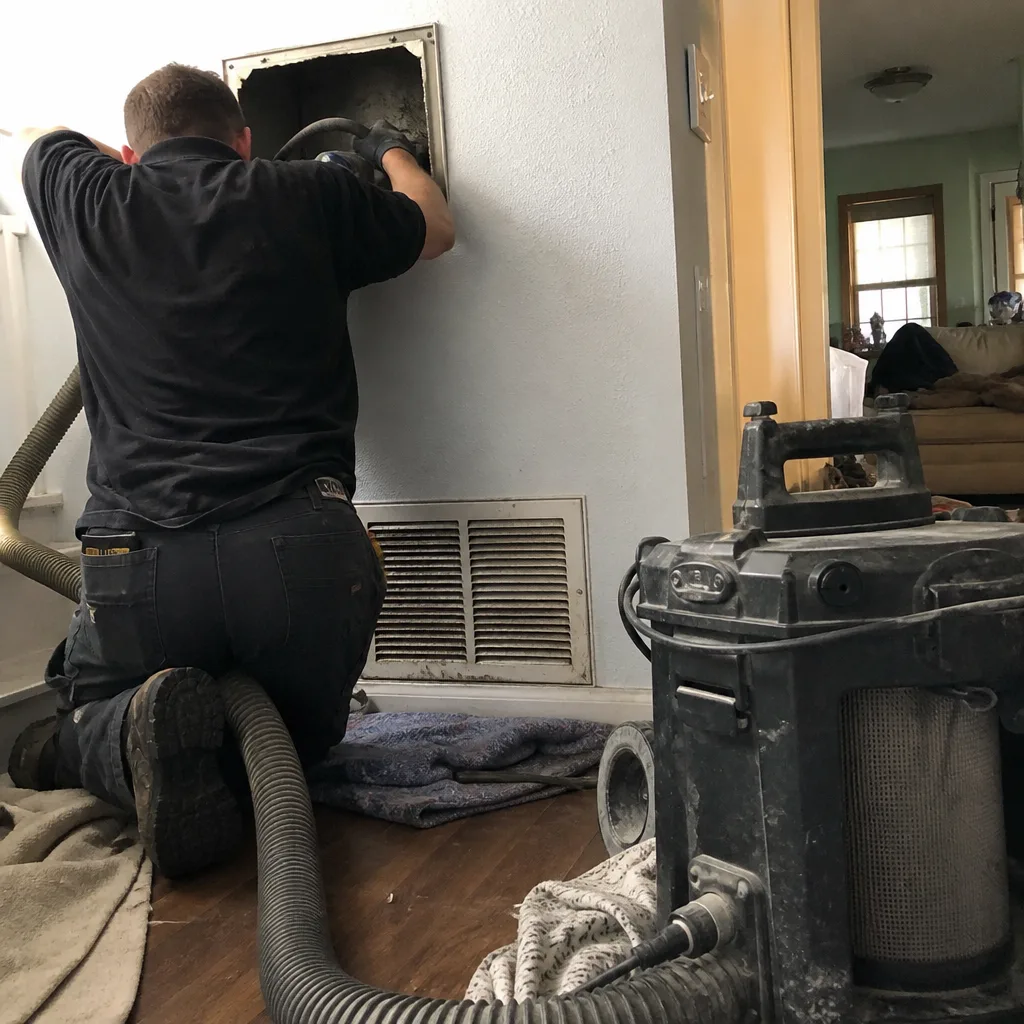
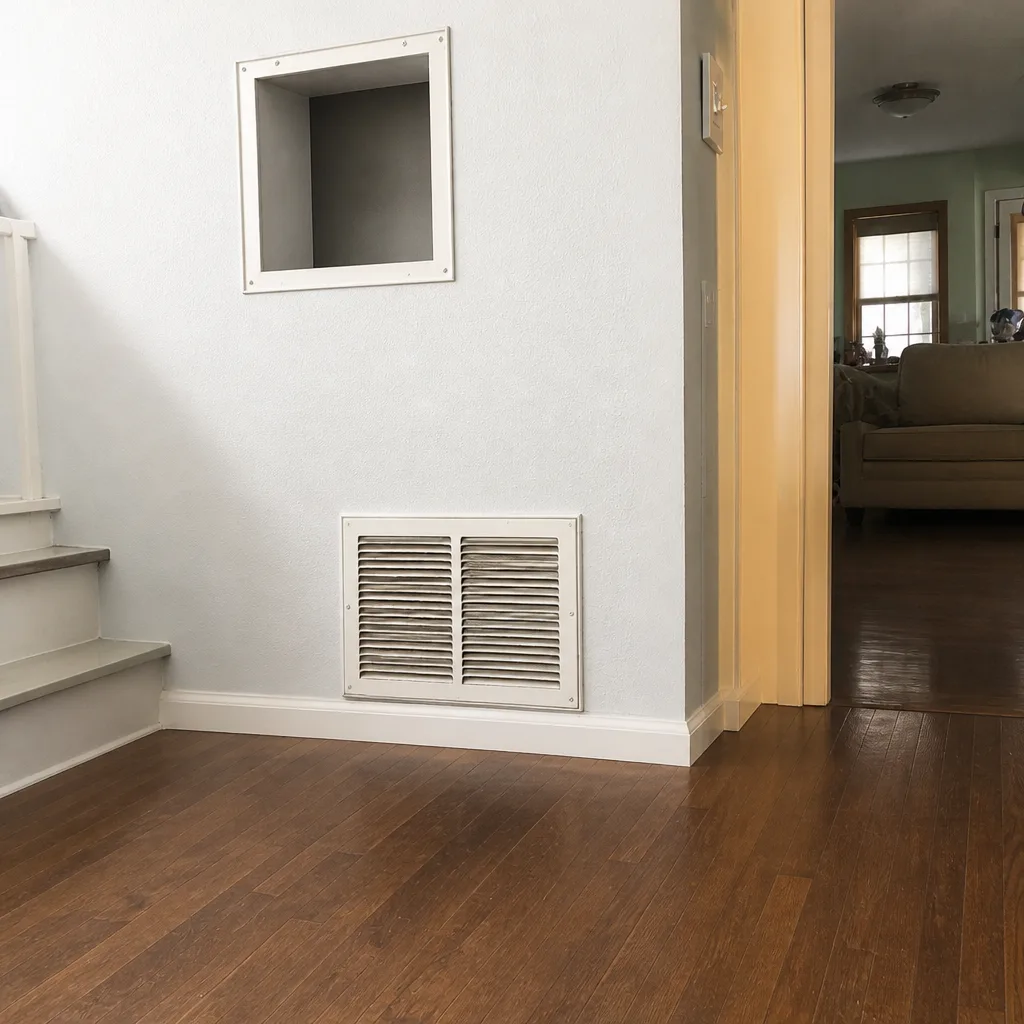
Whole-system duct and dryer vent check with before-and-after photos - you see exactly what came out of your vents
That "$99 whole-house special" is a bait ad - the real number appears once they are in your hallway, or the "clean" is a shop-vac at the register. We photograph the inside of your ducts before and after instead.
DIY vs Professional Air Duct Cleaning: The Provo Homeowner’s Decision Guide
Here’s the part most duct cleaning advice skips: the register you can reach with a shop vac isn’t where the debris lives. It’s where the debris exits. A homeowner with a vacuum and a brush kit can genuinely clean the first foot of a supply run – and that work has real value. But the trunk line under the floor, the return air plenum feeding the air handler, and the blower wheel itself are physically sealed off from consumer tools. That’s where most of the accumulated mass sits. This guide walks through exactly what you can reach, what you can’t, and how to decide which approach fits your Provo home.
Quick Answer
DIY air duct cleaning is worth doing as maintenance between professional cleanings, not as a replacement for them. A homeowner can safely clean register covers, the visible 12 to 18 inches of supply boots, the return grille, and the full length of a dryer vent with the right brush kit. Everything beyond that point – trunk line interiors, the air handler, the blower wheel, and the evaporator coil – requires negative pressure and rotary contact equipment that consumer tools don’t provide. In Provo, a DIY-only approach makes sense for a newer system cleaned professionally within the past few years; it does not make sense after a renovation, after water intrusion, or in a home with fiberglass duct liner.
Styles & brands we work with
- Whole-home duct cleaning
- Dryer vent cleaning
- Camera inspection
- Sanitizing & deodorizing
Table of Contents
- What You Can Actually Reach With Consumer Tools
- What Requires Professional Equipment and Why
- When DIY Is Genuinely Enough
- When DIY Is Risky or Counterproductive
- What Provo Homes Specifically Deal With
- Cost and Benefit: The Real Comparison
- Common Mistakes to Avoid
- When to Call a Professional
What You Can Actually Reach With Consumer Tools
Start with the honest inventory. Consumer tools have a real working footprint, and knowing it precisely saves you from wasting an afternoon on a task that can’t reach the contamination anyway. Here’s what a homeowner can clean effectively:
Register covers and grilles
Pop the screws out, wash the covers in a utility sink with dish soap, and dry them fully before reinstalling. A soft brush or a microfiber cloth gets into the louvers. This is straightforward, safe, and genuinely worth doing – it removes the visible dust cake that coats the face of the register and carries a real portion of the particulate sitting at the outlet.
The visible boot section of supply runs
Once the register cover is off, you’re looking into the boot – the transition piece between the floor or wall and the main ductwork. In most homes this is 12 to 18 inches of reachable duct. A flex brush on a drill or a hand-held duct brush will clean this section. Stop when you feel resistance or when the brush meets a joint; don’t force it around a bend or into a trunk line connection, because brush tools and flex duct joints don’t get along.
The return air grille
Returns pull air back to the air handler and typically carry the heaviest dust load in the system. Vacuuming the grille face and the first reachable section behind it removes a meaningful surface layer. A HEPA-rated shop vac is worth using here rather than a standard shop vac, which will simply blow fine particulate back into the room.
Dryer vent, full length
This is the one DIY task that can genuinely be done to professional standard, and it’s the one that matters most from a fire safety standpoint. A dryer vent brush kit with flexible rods, run from the dryer connection through to the exterior hood, cleans the full run. Work from both ends where access allows, remove the exterior hood to check for lint packing, and confirm the flap opens freely afterward. Lint accumulation in a dryer vent is a documented fire hazard and a common cause of dryer inefficiency. If you’re going to do one DIY task on this list, make it this one – or book dryer vent cleaning and have it done with the system under negative pressure.
Tools that are actually worth buying
- A HEPA-rated shop vac, not a standard contractor vac
- A flexible dryer vent brush kit with rod extensions (10 to 15 feet covers most residential runs)
- A hand-held or drill-mounted duct brush for register boots
- Nitrile gloves, a P2 or N95 respirator, and eye protection
- Blue painter’s tape to seal adjacent registers while you work
What Requires Professional Equipment and Why
The limitation of consumer duct cleaning isn’t effort or skill – it’s physics. Three things are physically impossible with homeowner tools, and each one covers a large portion of the system.
1. Negative pressure during agitation
Professional duct cleaning establishes negative pressure inside the ductwork before any agitation begins, typically with a vacuum rated at 3,000 CFM or higher connected through the main trunk or air handler. What that does is create a containment envelope: as brushes loosen debris from the duct walls, the air movement pulls that debris toward the vacuum rather than into your living space. Without negative pressure, every brush stroke redistributes particulate into the room. This is the single biggest quality gap between DIY and professional work, and it’s the reason duct cleaning contractors use equipment from manufacturers like Abatement Technologies – negative air machines and HEPA filtration units designed to capture contaminants at the source.
2. Rotary contact cleaning of trunk line interiors
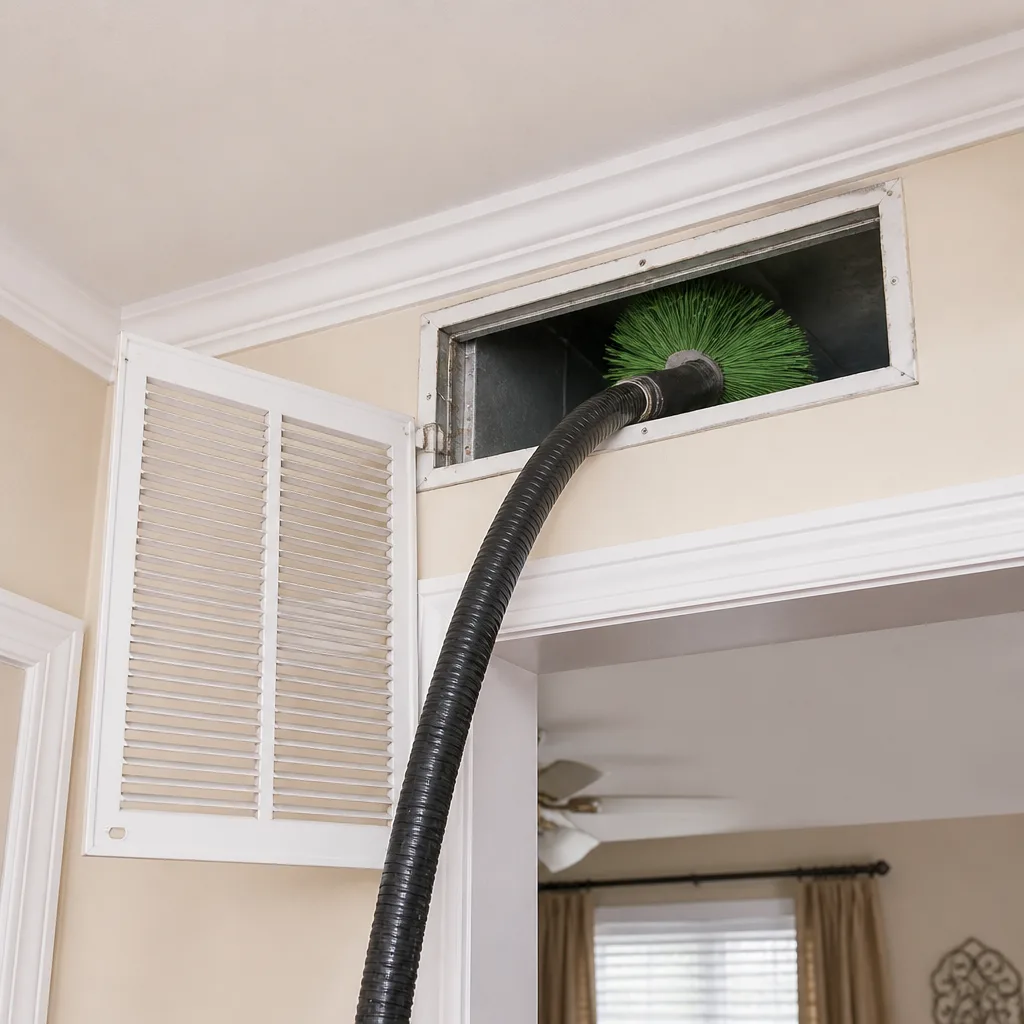
Trunk lines are the large rectangular or round ducts that distribute air from the air handler to the branch runs. In most homes they run through unconditioned space – crawlspace, attic, or under the floor – and they accumulate debris at the bottom of the run over years. Rotary contact cleaning systems like Rotobrush use a spinning brush head on a flexible shaft that can be fed through the full length of a trunk line, agitating the interior surface while negative pressure removes what’s loosened. A homeowner with a shop vac hose simply has no access to that interior space.
3. Air handler components
The air handler contains the evaporator coil and the blower wheel. The blower wheel is a squirrel-cage fan that accumulates dust on its blades over time; when it does, it moves less air and the system works harder to hit the thermostat setpoint. The evaporator coil sits behind it and collects a mix of dust and biological growth if moisture is present. Cleaning either one properly requires disassembly, coil-safe cleaning agents, and knowledge of how to reassemble without disturbing refrigerant lines. These are not homeowner tasks – and in the case of the coil, working around refrigerant is genuinely not a DIY job.
4. Post-cleaning verification
After cleaning, a professional verifies results with airflow measurement and visual inspection. This is the step that answers the question “how do I know the work was actually done?” – it’s how air duct cleaning in Provo gets documented rather than promised. A homeowner running a shop vac through a register boot has no way to measure static pressure or confirm that trunk line contamination was removed, because there’s no baseline and no access.
5. Duct repair and sealing
Cleaning reveals what cleaning can’t fix. If a professional finds disconnected flex joints, failed mastic at trunk connections, or gaps at the plenum, sealing them closes the loop between air quality and energy efficiency. A standard homeowner clean leaves those leaks in place – so the system keeps pulling attic or crawlspace air into the supply stream.
When DIY Is Genuinely Enough
We’re not going to tell you DIY is always the wrong answer, because it isn’t. There are real scenarios where register-level maintenance is the right call and a full professional clean is money you don’t need to spend right now.
Scenario 1: A newer system professionally cleaned in the last 2 to 3 years
If a Provo home has been cleaned on a reasonable interval and hasn’t had a renovation, pets added, or water intrusion since, the accumulation inside the trunk line is minimal. Year-round register maintenance keeps the outlet path clear between professional services, and that’s a sensible division of labor.
Scenario 2: No pets, no allergy concerns, no recent work
Households without pets, without family members with asthma or allergies, and without recent renovation have lower loading in the system. If the visible dust at the registers is manageable and airflow feels normal, a thorough register-and-boot clean with a HEPA vac is reasonable maintenance.
Scenario 3: You’re maintaining between professional cleanings
This is where DIY genuinely shines. Register covers, return grilles, and dryer vent cleaning done every year or two between full-system services keep the outlet path clear and keep you aware of changes – increased dust, a musty smell, a whistle at a register – that might warrant a professional visit sooner.
Scenario 4: You’re handling a single easily accessible register
One register in a bathroom, or one in a guest room you rarely use, doesn’t warrant a service call on its own. Clean it yourself and note the condition for the next full service visit.
When DIY Is Risky or Counterproductive
These are the situations where a homeowner with good intentions can make the system worse, or spend money on tools that won’t solve the problem.
Post-renovation debris
Drywall dust is fine particulate that infiltrates the entire system during sanding and cutting. It coats register boots but also travels through branch runs and into the trunk line and air handler, where it settles. Cleaning the registers after a remodel removes the most visible symptom while leaving the source in place – and drywall dust is abrasive enough to wear the blower motor over time. After significant renovation in a Provo home, a full-system clean is the right response, not a register wipe-down.
Suspected mold or microbial growth
If you see discoloration at registers, notice a persistent musty odor when the system runs, or find moisture near the air handler, stop before you agitate anything. Brushing mold growth without containment spreads spores through the living space. Proper response requires containment equipment, HEPA filtration, and antimicrobial treatment, followed by addressing the moisture source. Sanitizing treatments – like the Guardsman-grade products used in professional service – are only effective after the source is removed and the system is clean.
Flex duct systems
Flex duct is common in Provo homes, especially in attic runs. It’s easy to damage: the interior liner tears, the joints pull apart, and once the inner liner is compromised, the duct is no longer functioning correctly. A brush agitated inside a flex run without proper tension control can create a hole you won’t see. Brand-of-brush matters less than knowing where to stop. If you can’t see the inside of the run, don’t put a brush in it.
Systems with fiberglass duct liner
Older metal duct systems frequently have fiberglass acoustic liner on the inside surface. Consumer brushes, and even some contractor brushes used incorrectly, will scuff and damage the liner. Once the liner surface breaks down, fiberglass particulate enters the airstream and cannot be cleaned out – it needs to be sealed or the duct replaced. If you’re not sure whether your ducts are lined, inspect before doing anything inside them.
Any system with visible water damage or pest activity
Rodent activity inside ducts, or water infiltration from a roof or plumbing leak, means the system needs more than cleaning. Agitating a contaminated system without removing the source spreads the problem.
What Provo Homes Specifically Deal With
Duct cleaning isn’t generic work, because the conditions that load a system vary meaningfully by place. In Provo, a few local factors shape how much accumulation a home sees and on what timeline.
Seasonal dust and inversion periods
Provo sits in the Utah Valley, and the valley’s winter inversion periods trap dust and particulate close to the ground for weeks at a time. During those periods, outdoor air is dirtier than usual, and if a home’s return system is pulling air from a leaky return path or a combustion appliance zone, more particulate enters the system. Homes in Provo with return leaks tend to accumulate faster than the same system in a cleaner climate. Sealing return leaks – part of our duct repair and sealing work – reduces that loading.
Dry air and static dust loading
Utah Valley winters run dry, and low indoor humidity increases static charge on duct surfaces. That means fine dust is more likely to stick to the interior walls of metal duct rather than pass through to the filter. The result is a slow build of caked dust that does need contact cleaning to remove – a shop vac can’t touch it, because you can’t reach the interior surface. Whole-home humidification, which we service through Aprilaire-compatible equipment, changes the behavior of that dust inside the system.
Housing stock realities
Provo’s housing mix includes a substantial number of older homes and a substantial number of newer builds. Older homes may have flex duct retrofits, added returns, or lined metal duct – each with a different cleaning approach. Newer homes in the area frequently have multiple flex runs and enclosed returns, which are more prone to joint separation and more dangerous to brush without tension control. Neither case is a strong argument for a DIY full-system attempt.
High summer cooling load
Provo summers push residential cooling systems hard. A blower wheel with 40% of its airflow blocked by dust does worse in a Provo summer than it would in a milder climate, because the system is being asked to move maximum air for longer periods. Blower wheel cleaning is one of the most underrated parts of HVAC cleaning in Provo, and it’s one of the parts a homeowner simply cannot do.
Cost and Benefit: The Real Comparison
Framing this as “DIY is free” misses the actual comparison. DIY has a materials cost, a time cost, and a quality cost. Here’s a realistic look at each.
What DIY actually costs you
- HEPA shop vac: $100 to $250 (one-time, reusable)
- Dryer vent brush kit with rods: $30 to $70
- Register brush: $20 to $40
- Respirator, gloves, eye protection: $30 to $50
- Time: 3 to 5 hours for a thorough first pass, 1 to 2 hours for maintenance passes after
- Quality gap: register-level only; trunk line and air handler untouched
What professional cleaning covers
- Full negative pressure setup and containment
- Rotary contact cleaning of trunk line interiors
- Branch run cleaning from the trunk to the register
- Air handler blower wheel and evaporator coil cleaning
- Post-cleaning airflow verification and before-and-after documentation
- Repair and sealing of any leaks or disconnected joints found in the process
- Optional sanitizing of the cleaned system with Guardsman-grade products
The amortized comparison
Most residential systems on a reasonable cleaning interval in Provo are serviced every 3 to 5 years. Amortized over that window, the per-year cost of professional full-system cleaning is modest, and it covers the interior and the air handler that DIY cannot touch. The materials cost of DIY tools is not a one-time expense only – it’s a one-time expense that then delivers value every year. The fair comparison isn’t “DIY is free” versus “professional costs money”; it’s “DIY handles 20% of the system every year” versus “professional handles the whole system every 3 to 5 years, and DIY maintenance in between.”
The quality difference shows up in two places: air quality when the system runs, and system longevity. A blower wheel kept clean moves the rated airflow and puts less stress on the motor. A trunk line kept clear doesn’t seed downstream branch runs. A sealed system doesn’t pull attic or crawlspace air back into the supply. Those are cumulative benefits that a register-level clean can’t produce, which is why we tell homeowners in Provo to think of DIY as maintenance, not as a substitute.
Common Mistakes to Avoid
- Using a standard shop vac for register cleaning. A standard shop vac exhausts fine particulate into the room. On a Provo home, that’s the same dust you were trying to remove. Use a HEPA-rated vac, or skip the DIY cleaning and book a proper service.
- Running a brush past the boot into the branch run. This is the fastest way to separate a flex duct joint or damage a liner. Stick to the section you can see; anything past the first joint is a professional job.
- Agitating suspected mold growth. If there’s any sign of moisture or musty odor, stop. Containing and removing the source needs professional equipment, not a brush and a vacuum.
- Ignoring the return grille in favor of the supply registers. In a Provo system, the return carries the heavier load. The first reachable section behind the return grille is worth cleaning every time you do a maintenance pass.
- Skipping the dryer vent because it’s a hassle. Dryer vent fires are a documented annual risk, and vent lint accumulation is a well-understood cause. If you’re cleaning anything in your home, clean the dryer vent.
- Cleaning registers after a renovation and calling it done. Drywall dust infiltrates the entire system, not just the boots. Post-renovation is the clearest case for a full professional clean.
- Assuming new construction means clean ductwork. Construction debris – sawdust, drywall fragments, offcuts – often ends up in the system during the build. A “new” system with construction debris in the trunk line is dirtier than a well-maintained one.
When to Call a Professional
A professional cleaning in Provo makes sense in these situations: after a renovation that generated significant dust, after any water intrusion or suspected mold growth, when the home has a pet or a family member with asthma or allergies, when a system has never been cleaned or hasn’t been in more than five years, when airflow feels weak or the blower is noisy, when flex duct or lined metal duct is present, and when you want documented proof of what was in the system and what was removed. Call us at (866) 937-8191. We answer 24/7. Fast dispatch from 7am to 7pm, Sunday through Friday. Estimates are free, and Provo Air Duct Cleaning Pros brings the full-scope equipment – Rotobrush contact cleaning, Nikro HEPA extraction, and Abatement Technologies filtration – so the work is verified, not promised.
Frequently Asked Questions
You can clean the register covers, the visible 12 to 18 inches of supply boots, the return grille, and the full length of the dryer vent with a HEPA shop vac and the right brush kit. You cannot clean the trunk line interior, the branch runs past the first joint, the air handler blower wheel, or the evaporator coil – those need negative pressure and rotary contact equipment. For exact pricing on a full-system clean in Provo, call (866) 937-8191 for a free estimate.
Whole-system residential cleaning in Provo typically falls in the range you’d expect for full-scope service: significantly more than a register-level maintenance pass, but priced as a single job rather than a per-vent line item. We don’t quote per-vent prices, because ductwork doesn’t fail or accumulate contamination per vent. Call (866) 937-8191 for a free estimate based on your specific system layout – estimates are free and the written scope is agreed before work starts.
Yes, in specific situations. Brush tools forced past flex duct joints separate them and can tear the inner liner. Contact brushes run inside fiberglass-lined metal duct scuff the liner surface and release fiberglass into the airstream. Agitating suspected mold without containment spreads spores through the living space. If you’re not sure what type of ducting you have, don’t put a brush in it. Call (866) 937-8191 and we can walk through what your system needs.
Every 3 to 5 years for most Provo homes on a reasonable interval – more frequently if the household has pets, a family member with allergies or asthma, recent renovation, or a system with known leaks. DIY register maintenance in between is worthwhile but does not extend the interval on the trunk line, because access to that space is the limiting factor. Call (866) 937-8191 to schedule an estimate and get a specific interval recommendation for your system.
Per-vent pricing and low teaser quotes are common in the trade, and they reflect a fundamentally different scope – typically register-level cleaning without negative pressure and without air handler service. The way to avoid bait-and-switch is to ask exactly what’s included: trunk line cleaning, branch runs, blower wheel, evaporator coil, containment setup, and post-cleaning verification. A quote that doesn’t include those is not the same service. Call (866) 937-8191 for a written scope and a free estimate.
Ask for before-and-after photos of your own system, and ask for the airflow measurement record taken after cleaning. We show our work – Rotobrush contact cleaning and Nikro HEPA extraction produce visible results inside the duct and at the register, and we document them. If a service can’t show you anything specific about your system, the work isn’t verifiable. Call (866) 937-8191 for a free estimate.
The Bottom Line
DIY duct cleaning is real work that genuinely helps when done correctly and within its limits – registers, boots, return grille, and dryer vent. It is not a lesser version of professional cleaning; it’s a different task, and the two solve different problems. The homeowner with a HEPA vac and a brush kit is maintaining the outlet path. The professional with negative pressure and rotary tools is removing the accumulation inside the trunk line and the air handler where most of the contamination lives. Both have a place in a Provo home’s air quality plan, and neither replaces the other. Pair annual DIY maintenance with a full-system professional clean every 3 to 5 years, and you’ll get the most out of both.
Provo Air Duct Cleaning Pros provides Provo Air Duct Cleaning Pros residential and commercial service – air duct cleaning, dryer vent cleaning, HVAC cleaning, duct repair and sealing, and air quality sanitizing – using Rotobrush, Nikro, Abatement Technologies, and Honeywell and Aprilaire-compatible service. Call (866) 937-8191 for a free estimate. We answer 24/7. Fast dispatch from 7am to 7pm, Sunday through Friday. Our technicians have up to 10 years of experience.
Written by the team at Provo Air Duct Cleaning Pros.
See the difference
 Before
 After
 Before
 After
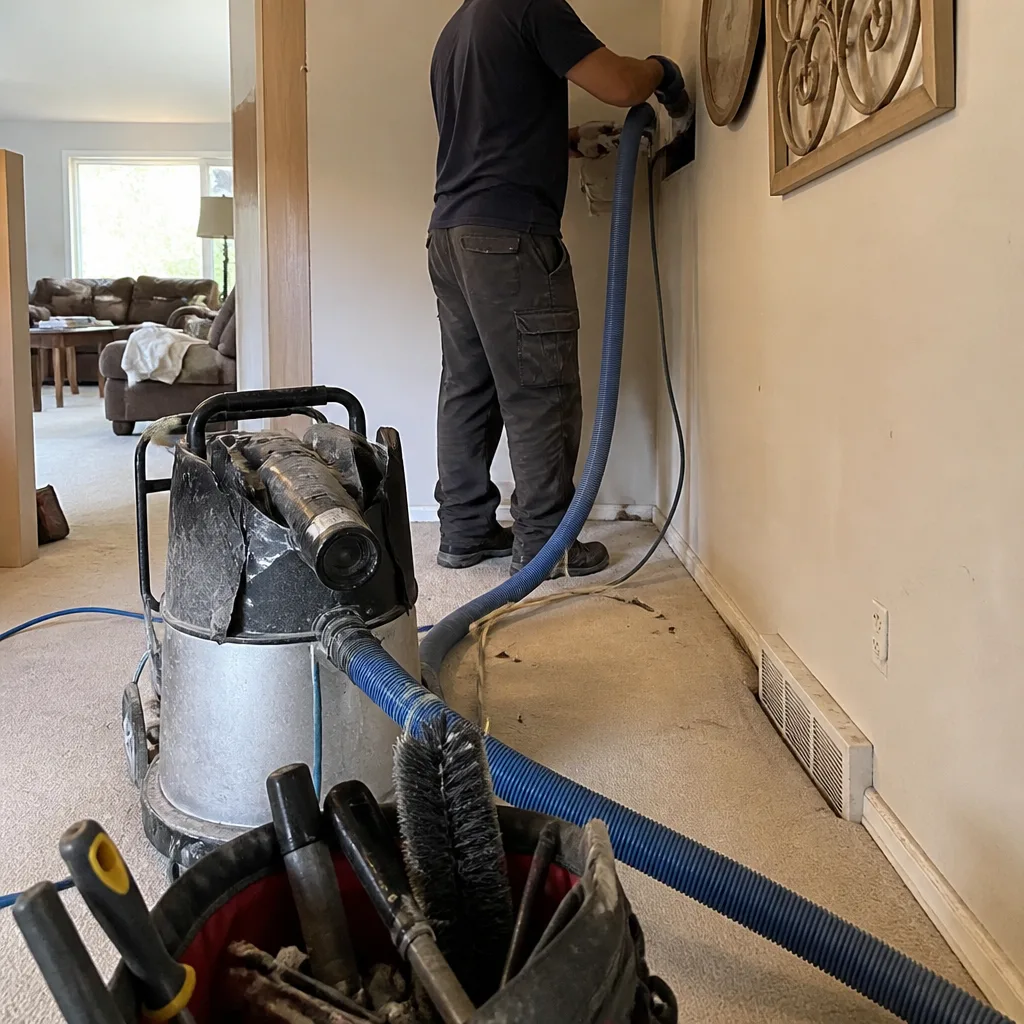 Before
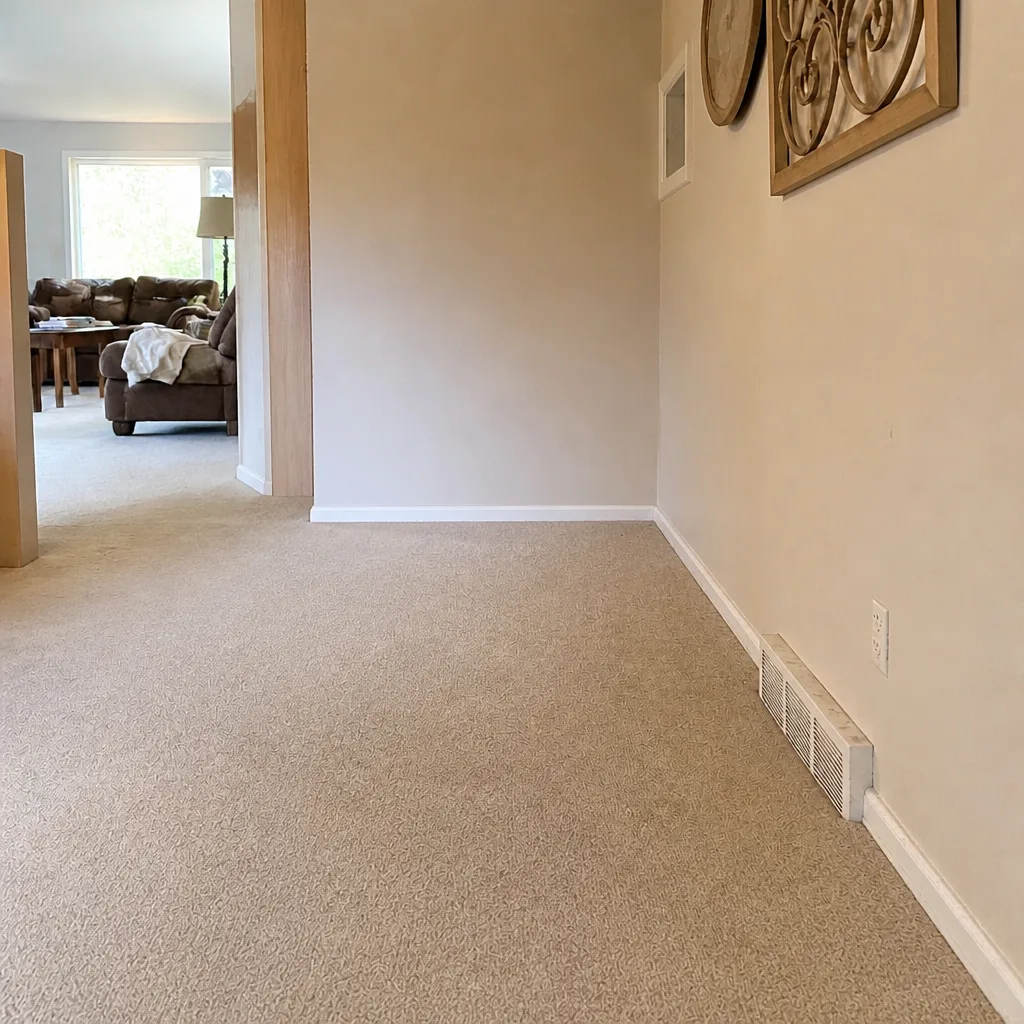 After